The stacking method
From a base lift to a planned tailings stack.
Secure Stacked Dewatering Containers (SSDCs) describe the use of geotextile containers to retain and dewater tailings within a staged stacking arrangement. Develop the storage configuration and operating sequence together.
Start with the proposed stack.
Develop the footprint, bag orientation, base lift and upper-tier arrangement around the site and storage demand. The concept needs to show how capacity is added, where water is collected and how operators can access the filling and monitoring points.
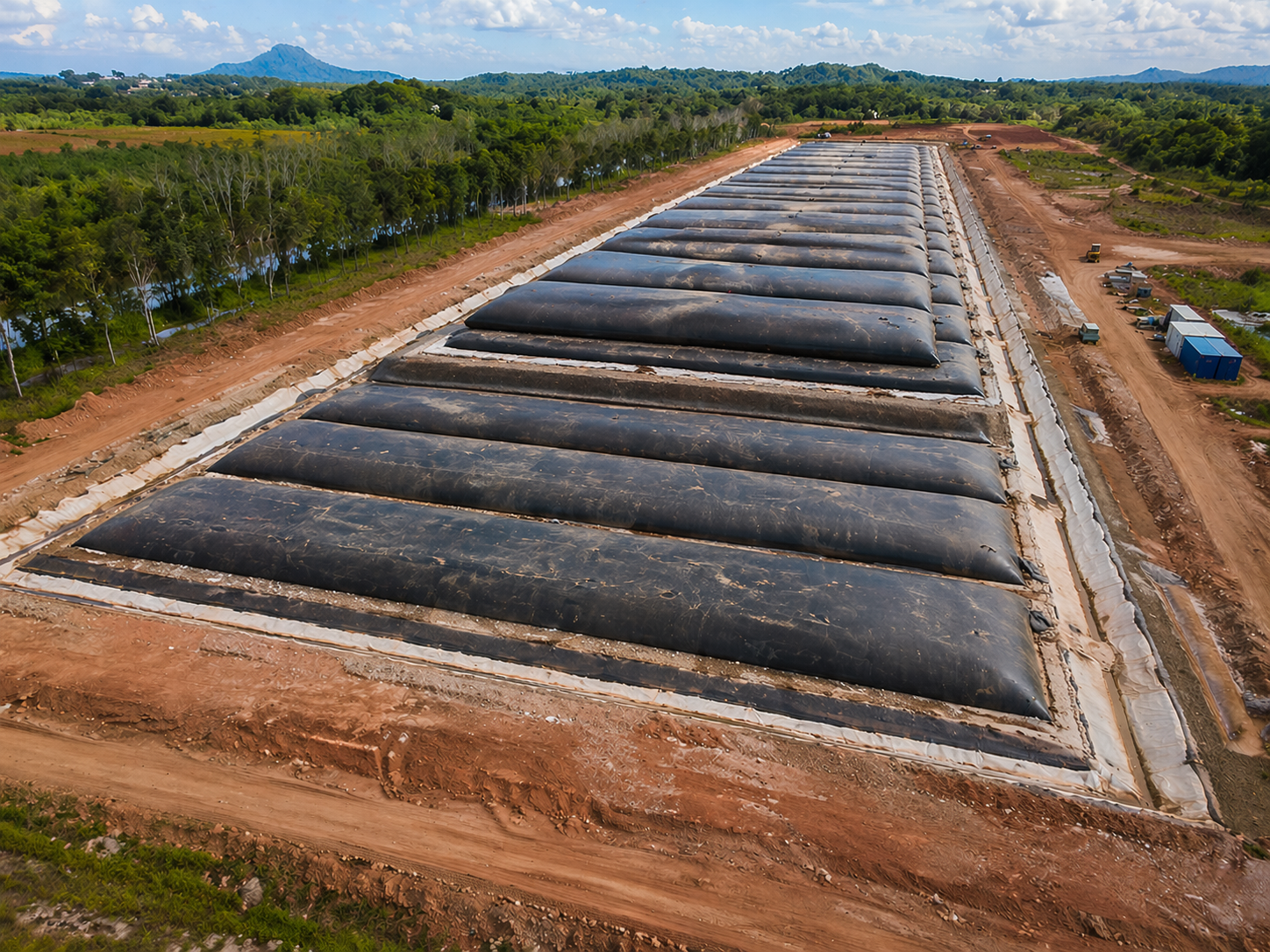
Assess the proposed offsets, setbacks, loading and stack shape using the tested material and interface properties. Configuration is a design input, rather than a fixed arrangement taken from an illustration.
The base supports the whole stack.
Consider bearing capacity and settlement, earthworks, containment requirements, liner protection and drainage capacity under the final and staged loads. The layout should also provide the water collection route and practical access for filling and inspection.
A foundation suitable for a first lift is not automatically suitable for the completed stack. Assess the proposed construction sequence and ultimate arrangement together.
Release each lift against defined criteria.
Representative tailings tests should establish conditioning, filtration, consolidation, strength and deformation behaviour under the expected operating conditions. Use that information to develop staged filling and loading controls.
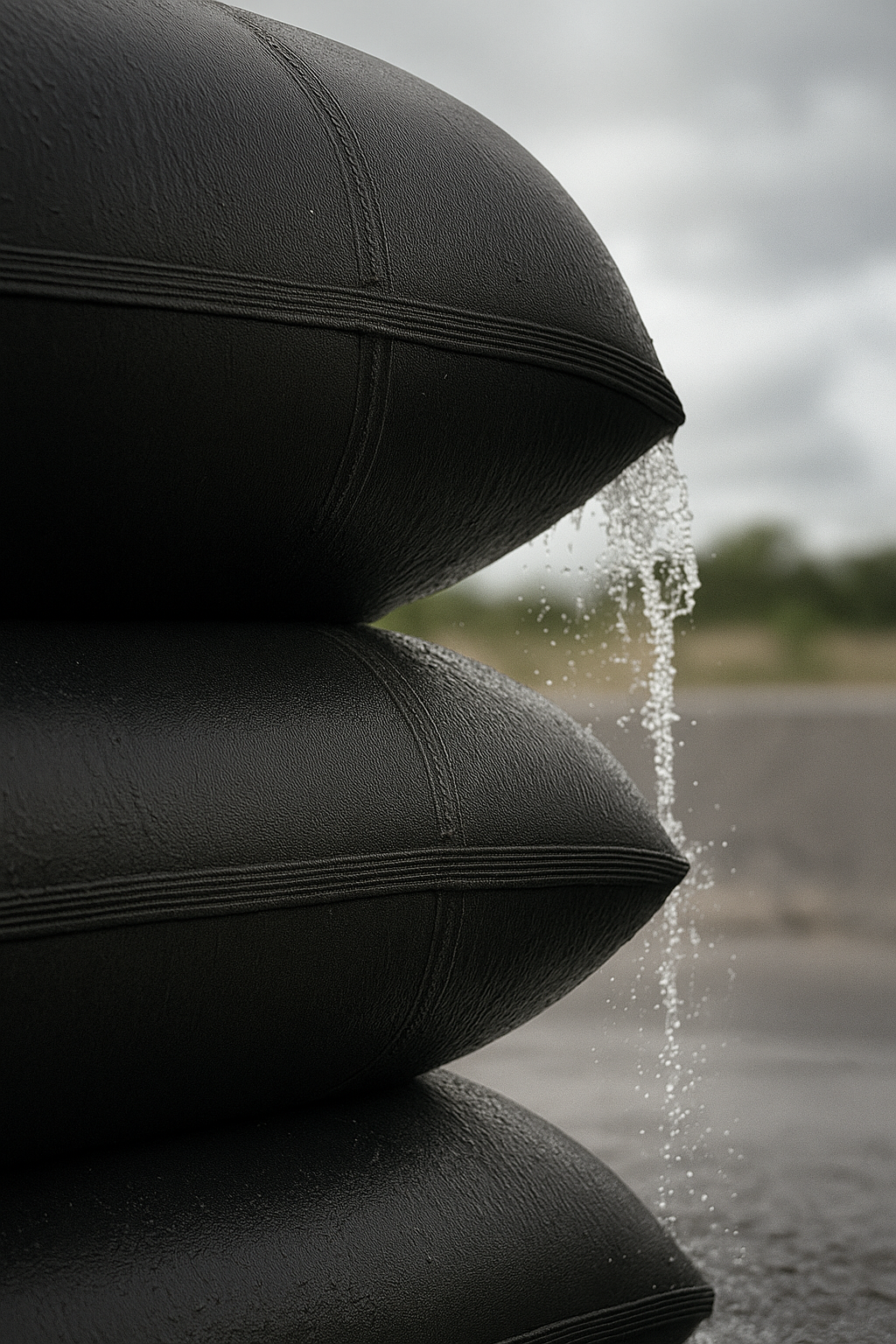
Define what has to be measured and accepted before the next tier can be filled. Relevant considerations include retained-material strength, pore-water conditions, deformation, bag and seam demand, interfaces and overall stability.
Keep the load case during filling distinct from the later consolidated condition. The construction-stage assessment and inspection hold points should follow the actual programme.
Connect the geometry to the tested properties.
- Tailings grading, solids concentration, chemistry and variability.
- Conditioning response, filtration and consolidation behaviour.
- Strength and deformation properties for the proposed loading.
- Fabric, seams, ports, interfaces and container geometry.
- Foundation, drainage, rainfall and water conditions.
- Staged and final stack configuration, access and loading.
Bag volume or nominal fabric strength alone cannot establish a permitted fill height or stack height. The supplied unit requirements, design basis and operating procedure need to agree.
Plan drainage and closure around the stack.
Drainage must work as the facility develops through its tiers. Assess collection pathways, protection of drainage components, rainfall, filtrate quality and the reuse or treatment route.
Develop exposure protection, surface-water controls, the closure cover and monitoring requirements with the storage concept. Retained tailings, fabric durability, settlement and access need to be considered over the required facility life.
Clear-looking filtrate does not establish water quality. The applicable dissolved and suspended constituent requirements still need assessment.
Compare storage alternatives on the same basis.
| Storage method | Operating approach | Questions to resolve |
|---|---|---|
| Stacked geotextile containers | Tailings retained and dewatered within containers arranged in engineered lifts. | Material response, bag integrity, cycle time, tier loading, interfaces, settlement, drainage and stack stability. |
| Mechanically filtered stacking | Filtration plant produces dewatered material for transport and engineered placement. | Filterability, plant reliability, transport, moisture control, placement, compaction and stack performance. |
| Impounded tailings | Tailings and water managed within an engineered containment facility. | Embankment and foundation performance, water balance, deposition, seepage, monitoring and closure. |
Compare the full operating and closure cost, footprint, water management, construction stages and credible failure scenarios. Geotextile dewatering and mechanical filtration are different processes; each proposed storage system needs its own assessment.
Use the research to frame the design questions.
- Geotextile tubes to dewater and confine fine gold tailings — GeoAmericas 2020, IGS Digital Library. The linked record describes filling and dewatering tests on the base layer of a proposed three-level installation. It does not establish performance of the completed stack.
- Global Industry Standard on Tailings Management — Global Tailings Review, 2020. A lifecycle framework for tailings facilities; it is not a product approval.
Check how the published material, scale, climate, loading and configuration differ from the proposed stack.

Work through the stack configuration.
Send the site plan, proposed capacity, tailings data and programme. Kontain can help develop the next feasibility or design step.
Technical support + material supply
Kontainer™ Geobags and associated geosynthetics, supported by practical engineering input for Australian and international projects.