Establish the base.
Develop the platform, liner and drainage, bag locations and access for the first lift.
Secure Stacked Dewatering Containers · SSDCs
A modular approach to retaining, dewatering and stacking mine tailings in geobags. Develop the stack configuration, filling sequence, water pathway and closure strategy with Kontain.
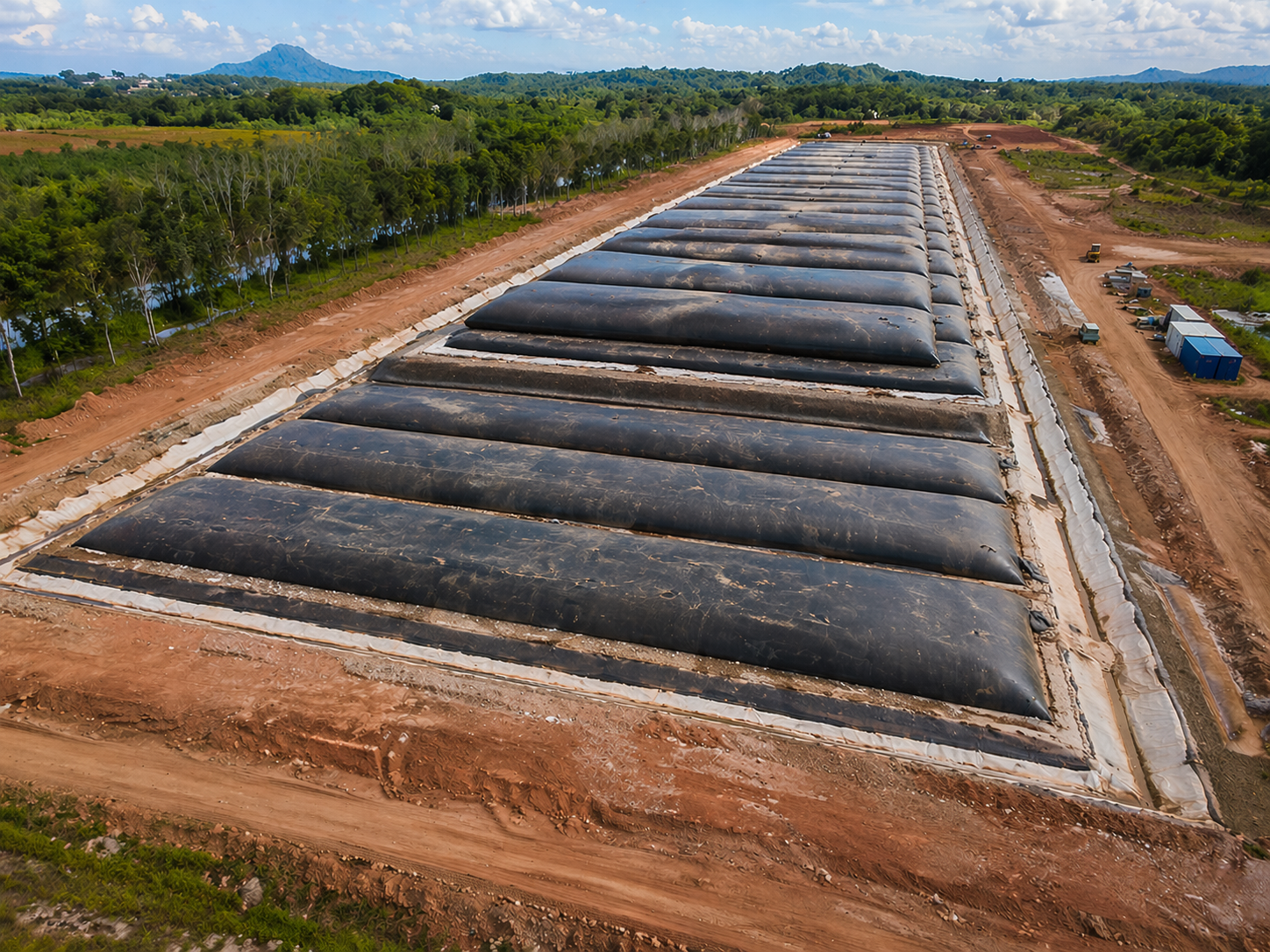
A stacked tailings storage approach
The objective is a tailings stack built from geotextile containers. Dewatering and consolidation provide the basis for assessing each lift, while the overall facility needs a planned footprint, drainage system, loading sequence and closure arrangement.
Start with the final storage concept, then work back through the stack geometry, tailings behaviour and filling programme.
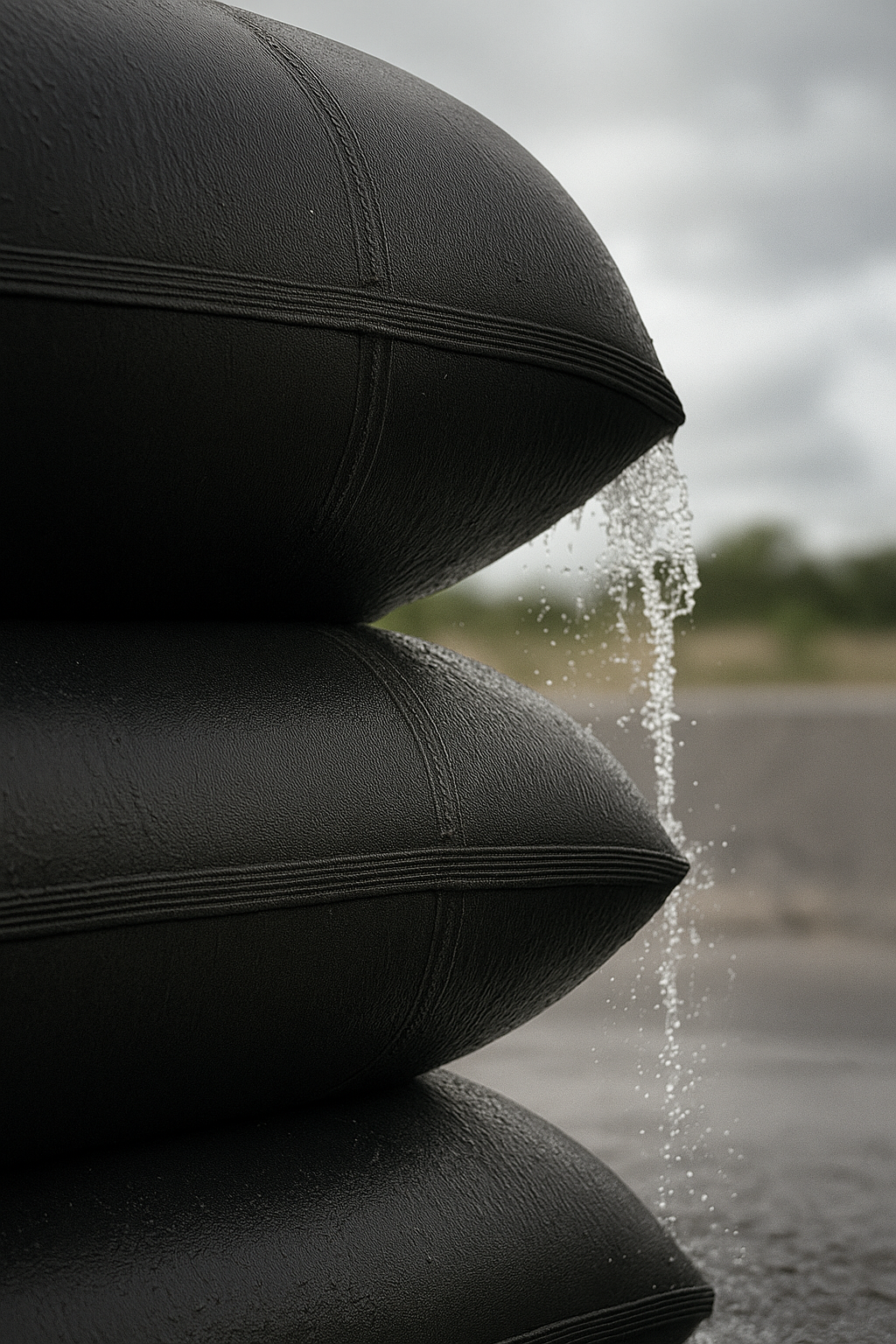
Stack configuration
Set the bag layout, foundation requirements, containment, drainage collection and operating access around the available site.
Assess bag orientation, offsets, edge setbacks, load transfer and the proposed stack shape as part of the engineered configuration.
Confirm the material response and acceptance criteria before filling or loading each successive tier.
Consider settlement, stability, water, exposure protection, monitoring and the closure cover alongside the operating plan.
From the base lift to closure
Each stage needs defined controls and an engineering basis. A generic drying period or a nominal bag strength cannot establish when the next tier is ready.
Develop the platform, liner and drainage, bag locations and access for the first lift.
Use controlled filling and conditioning, collect the water and assess consolidation and material behaviour.
Verify strength, settlement and stability against the design hold points before applying the next-stage load.
Develop exposure protection, surface-water management, the closure cover and long-term monitoring.
Why assess stacked containers?
The approach is worth examining for small and mid-sized mine operations, staged storage expansions and selected tailings reclaim projects. The benefits depend on the material and the whole facility design.
Assess cells and successive lifts against the production programme, consolidation time and available footprint.
Containers form the storage units. Their integrity, interfaces and overall stack stability remain part of the facility assessment.
Connect drainage and water reuse or treatment with the operating sequence and final protection strategy.

Bring the site plan, tailings data and production basis. Kontain can help develop the stack concept, agreed engineering scope and Kontainer™ Geobag material package.
Technical support + material supply
Kontainer™ Geobags and associated geosynthetics, supported by practical engineering input for Australian and international projects.
Stacking questions
Move from a storage concept to an engineering and operating basis that fits the site.
The permitted arrangement depends on tailings properties, foundation conditions, bag and seam demand, interfaces, water conditions and the staged stability assessment. The concept images do not set a design limit.
Use the project’s measured consolidation and strength response, design loading conditions and hold points. There is no universal drying period that establishes readiness for another lift.
Assess stacked containers alongside the credible storage alternatives. Throughput, drainage area, water chemistry, material behaviour, climate, closure and whole-of-life cost determine the project fit.
Discuss stack configuration and modelling, the pad and drainage layout, bag sizing and material supply, filling interfaces and the agreed project scope. Review Kontain’s current geobag supply and design scope or send a tailings stacking enquiry.